
LearningEnglish
Text
The primary aim of the English Department at the King David High School is to develop pupils who recognise and enjoy the integral importance of communication in the wider world, while equipping them with the skills and confidence to become powerful and effective communicators in their own right.
We strive to develop successful learners who are literate, creative and enquiring. Students are taught to recognise the inextricable links between reading, writing, speaking and listening through the study of a wide range of language and literature from different ages, genres, registers and cultures. We aim to enable pupils to respond critically and personally to the texts they study at all levels.
While we recognise the value of English as a core subject, we are passionate about encouraging students to see its relevance beyond the classroom and examination success. Pupils are taught to write and speak for a range of purposeful contexts, developing a sense of responsibility and preparing them for life and work. We also provide opportunities for pupils to explore their own values and beliefs alongside those of others, to recognise and discuss different viewpoints and interpretations, and to respond with confidence by developing logical arguments and justifying their views.
Overview of the Curriculum (KS3–KS5)
Key Stages 3 and 4
The English curriculum at Key Stages 3 and 4:
-
Ensures pupils study and respond to a wide range of literary genres, including non-fiction and transactional texts, poetry, drama and prose
-
Ensures pupils engage with texts from different time periods, encompassing contemporary, modern and heritage texts
-
Develops pupils’ ability to communicate ideas and express themselves for different audiences, purposes and genres
-
Encourages a love of learning and independent study
-
Equips pupils with essential skills for life
We follow a spiral curriculum model in which key skills are revisited, developed and refined over time. Reading, writing and spoken language skills become increasingly complex as pupils progress through the curriculum. Substantive and disciplinary knowledge — such as English terminology and the socio-historical contexts of texts — is also revisited regularly, enabling pupils to build on prior learning and engage fully with increasingly challenging texts and ideas.
Key Stage 3
Year 7
As pupils begin their secondary study of English, we aim to foster the love of literature developed in primary school and encourage a lifelong enjoyment of reading. Pupils explore how writers create meaning in fiction and non-fiction texts and learn how to recreate these effects in their own writing. Units include Myths, Signs and Symbols, which introduces pupils to foundational ideas in literature, and Gothic Fiction, providing an early introduction to historical context. All pupils study Shakespeare in the summer term.
Year 8
The Year 8 curriculum builds on and revisits skills developed in Year 7, with texts that are more challenging in content and ideas. Pupils study a modern novel and are introduced to modern drama. They develop skills in writing and speaking to express viewpoints and arguments. Alongside this, pupils explore poetry from a range of cultures, encouraging reflection on identity and an appreciation of others’ experiences. Personal expression is further developed through units on descriptive and narrative writing.
Year 9
In Year 9, pupils are supported as they develop more advanced skills and understanding. They explore ideas of society through 20th-century fiction and a range of contemporary texts that reflect diversity. Pupils examine how speech and writing can be used to explore and debate complex issues in the modern world. They deepen their understanding of literary heritage through the study of a 19th-century novel and Shakespeare’s Romeo and Juliet. At the end of the year, pupils work collaboratively to explore themes of social change.
Key Stage 4
All students study both GCSE English Language and GCSE English Literature, following the AQA specification. External examinations for both subjects take place in May and June of Year 11.
Key Stage 5
The English Department offers A Level English Literature and A Level English Language. The Edexcel specification is followed for both courses. A minimum of a Grade 7 in GCSE English Literature is recommended for entry to either course.
English Literature
Students study a wide range of literature from Shakespeare and his contemporaries to modern texts. The course offers opportunities to explore texts in depth, engage with writers’ ideas and consider both the historical contexts of texts and their enduring relevance to the human experience.
English Language
Students explore a range of language encounters, including spoken language in everyday life, how language is shaped by identity, how children acquire language and how language changes over time. The course develops analytical skills through the study of real-world language use.
Gallery


Quote
-
We aim to foster the love of literature developed in primary school and encourage a lifelong enjoyment of reading.
Text
Assessment and Feedback Approach
Assessment in English combines formative and summative approaches, including written responses, coursework tasks, spoken language activities and formal examinations. Students receive regular written and verbal feedback to support progress, develop analytical skills and improve extended writing over time.
Staff List and Teacher Specialisms
-
Ms V White – Head of Department
-
Mr J Ratcliffe – KS5 Coordinator
-
Mr R Shah – KS4 Coordinator
-
Ms E Holman – KS3 Coordinator
-
Miss Z Black
-
Mrs J Dodd
-
Mrs C Hamburger
Examples of Classroom Learning and Student Work
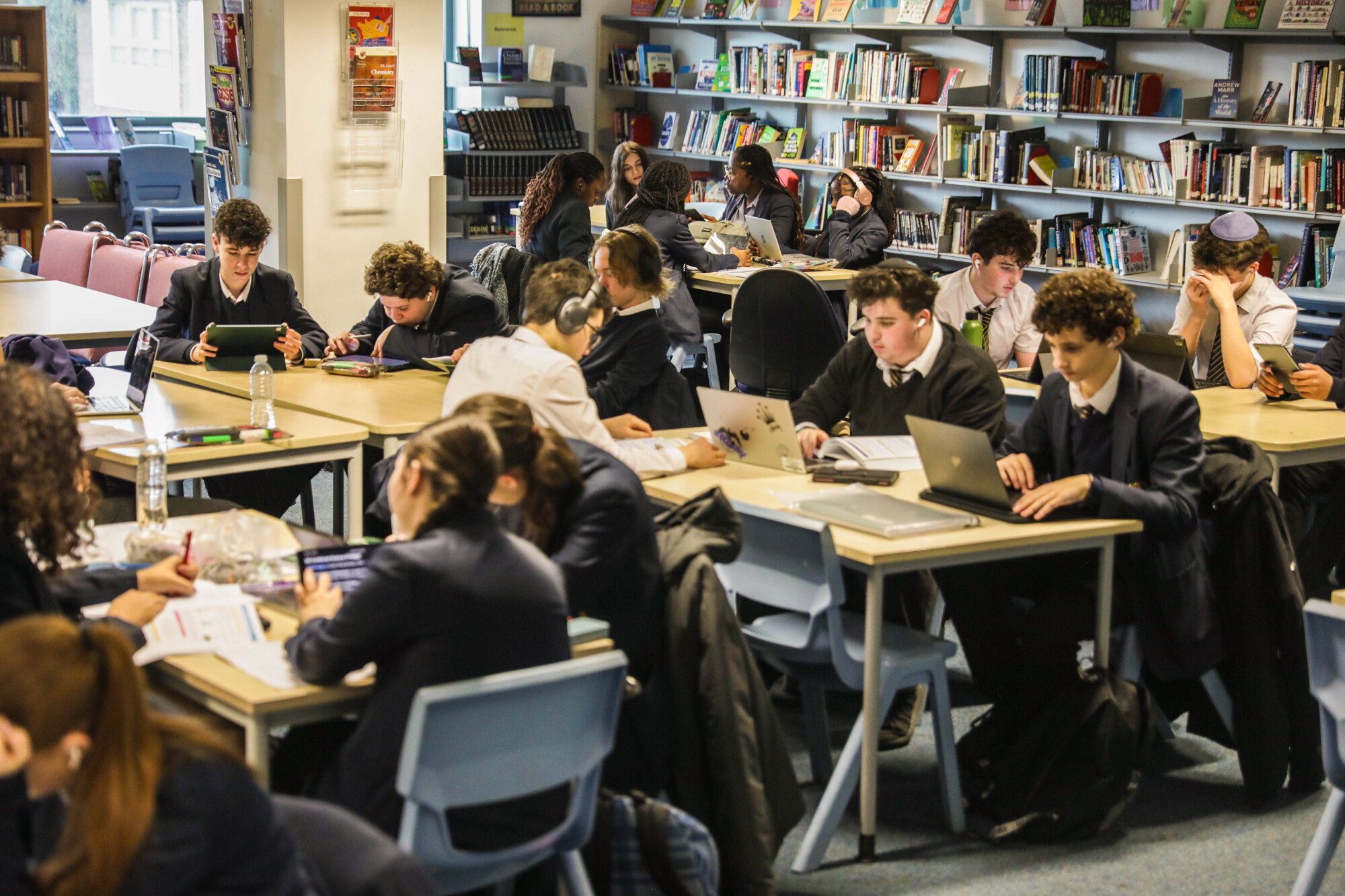
Classroom learning includes close reading of texts, analytical discussion, creative and transactional writing, spoken language activities and collaborative work. Students produce a range of written responses, creative pieces and extended essays, alongside presentations and discussions that develop confidence in speaking and listening.
Resources, Revision Guides & Homework Expectations
Students are supported through a range of resources, including set texts, revision guides, model responses and digital learning materials. Homework is set regularly and may include reading, written responses, exam practice, research tasks and independent revision in preparation for assessments.
Extra-Curricular Clubs and Enrichment Opportunities
The department seeks to share its love of English language and literature beyond the classroom. Enrichment opportunities include theatre trips, writer visits, creative writing competitions, lunchtime book clubs and curated reading lists, all designed to foster a lifelong love of reading and literature.
Career Pathways Linked to the Subject
English develops core skills valued across all sectors, including effective communication, critical thinking, collaboration, leadership, problem-solving and digital literacy. These skills make students adaptable and well-prepared for a wide range of future pathways.
More specifically, English supports progression into careers such as writing and publishing (author, editor, journalist, copywriter), media and marketing (public relations, advertising, broadcasting), education and training, law and the public sector, and the creative industries. Linguistic study can also lead to careers in speech and language therapy, forensic linguistics and lexicography.
Department Achievements
The department is proud of its strong examination outcomes, high levels of student engagement, and sustained participation in enrichment activities. Pupils consistently demonstrate thoughtful analysis, creativity and confidence in their work across all key stages.
Contact Information
For further information about the English Department, please contact the school office or the Head of Department via the school’s main email address.